
Electric vehicles (EVs) are more than just a cleaner alternative to petrol and diesel. They have become intelligent, connected machines that rely heavily on high-speed internet. From navigation to real-time battery monitoring, today’s EV ecosystem needs stable, low-latency connectivity to function smoothly. As India moves towards a smart mobility future, the demand for powerful home and public internet networks is growing quickly.
This change affects not only EV owners but also charging-station operators, smart-home users, and businesses investing in electric fleets. Reliable connectivity is now an important part of the EV experience.
In this blog, we explain why internet quality matters for EVs, how it impacts their performance, and where fast broadband makes the biggest difference.
The Rise of Connected EVs
Modern EVs are built with advanced sensors, onboard computers, and cloud-based software. These systems communicate with apps, charging stations, navigation services, and cloud platforms in real time. Without a strong internet connection, many smart EV features stop working or become unreliable.
Whether you use a home charger or manage a commercial EV charging point, fast internet is essential for smooth data transfer between the EV and the cloud.
Why EVs Need High-Speed Internet
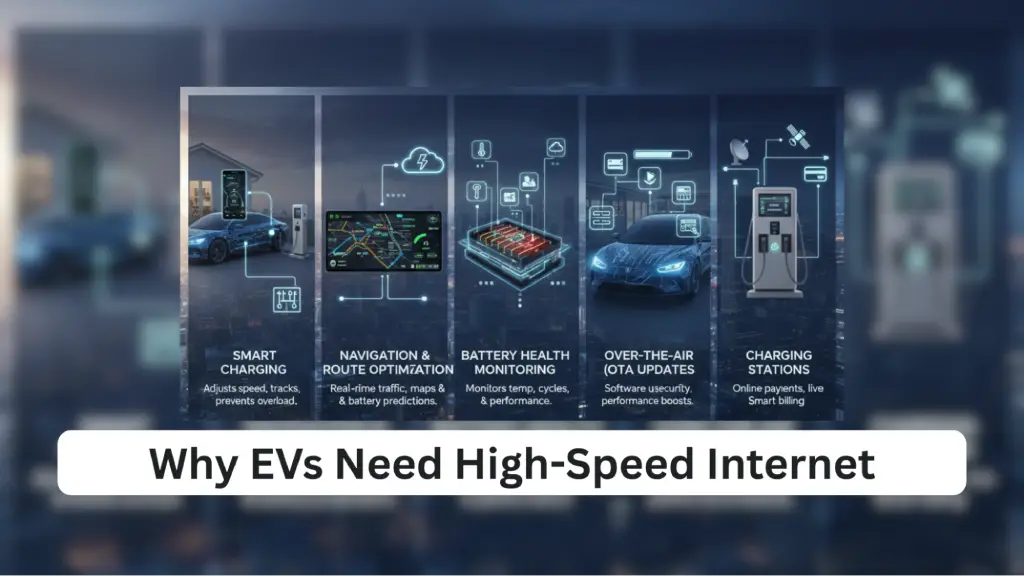
Here are the main ways internet affects the EV experience:
- Smart Charging & Energy Management
EV chargers, especially smart chargers, depend on internet connectivity to:
– Track electricity usage
– Adjust charging speed automatically
– Prevent overload during peak hours
– Monitor charging sessions through mobile apps
A weak connection leads to charging interruptions and inaccurate data. High-speed broadband ensures chargers update information instantly without delay.
- Real-Time Navigation & Route Optimization
EV drivers rely on real-time traffic updates, maps, and battery-range predictions. These functions need fast cloud communication.
With stable fiber internet at home, route planning apps get accurate data before a trip. EVs also update their internal maps automatically when connected to Wi-Fi.
- Battery Health Monitoring
EV battery management systems continuously exchange data with cloud servers, including:
– Temperature
– Charging cycles
– Range
– Performance
Slow internet delays this information, leading to outdated alerts or incorrect predictions. A high-speed network keeps battery insights updated in real time.
- Over-the-Air (OTA) Updates
Like smartphones, EVs regularly receive:
– Software upgrades
– System improvements
– Security patches
– Performance boosts
OTA updates often require a stable fiber connection because the files are large. Interruptions can cause updates to restart or fail.
This is a major reason why fiber broadband is becoming essential for EV households.
- EV Charging Stations Also Depend on Internet
Public and private charging networks rely on fast internet for:
– Online payments
– RFID verification
– Live availability status
– Smart billing
– IoT sensors
If a station loses internet, it may stop working completely or fail to process payments.
How High-Speed Internet Improves the EV Lifestyle
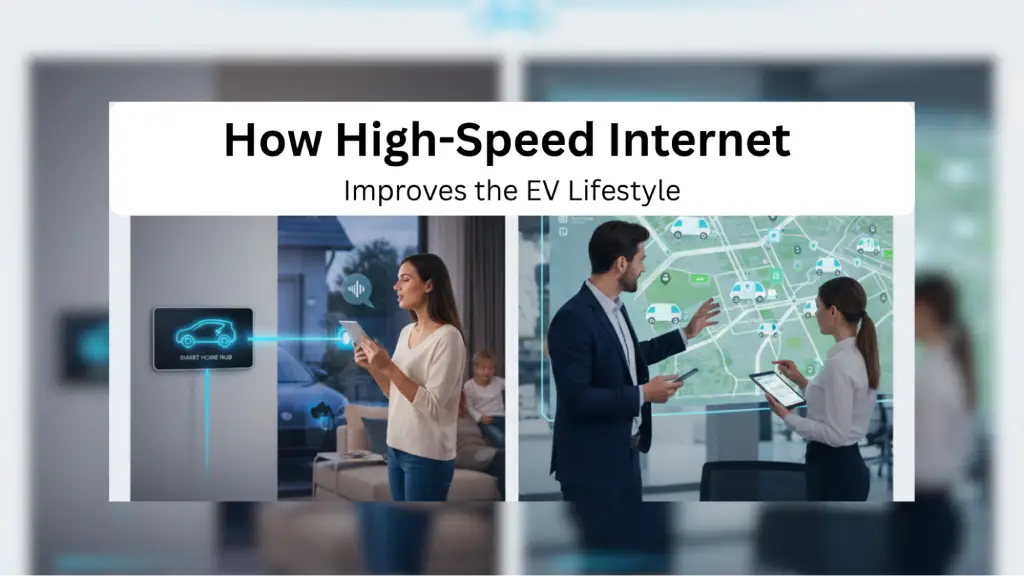
- Seamless Smart Home Integration
Many EV owners link their cars with smart home devices. High-speed broadband enables:
– Voice-controlled charging
– Scheduling EV charging at night
– Smart grid integration
– App connectivity across devices
- Better EV Fleet Management for Businesses
Companies with electric fleets need:
– Location tracking
– Battery status
– Driver analytics
– Vehicle health reports
Fast broadband improves the accuracy and frequency of this data transfer, ensuring smooth operations.
How Amar Broadband Powers Smart EV Connectivity
Amar Broadband plays a key role in creating seamless EV experiences. With fast fiber speeds, consistent connectivity, and support for smart devices, it helps EV owners link their chargers, apps, and home systems without interruption.
Whether downloading a large OTA update or syncing EV data to the cloud, Amar Broadband ensures the connection remains strong.
Their fiber network also benefits EV charging stations, smart businesses, and home users looking for long-term reliability.
Anyone exploring Amar Broadband plans can easily choose a high-speed option that supports everything from smart charging to daily work-from-home needs.
Users searching for Amar Broadband reviews often mention network stability and low latency both vital for smart mobility technology.
Conclusion
The future of mobility is smart, connected, and completely reliant on powerful internet. EVs are evolving into digital machines, and the quality of your home or business broadband greatly affects how well they perform.
From smart charging to navigation, fleet management to OTA updates everything depends on fast, reliable connectivity. Choosing a strong fiber network today prepares you for a future-ready EV lifestyle tomorrow.
With reliable providers like Amar Broadband, smart mobility becomes easier, faster, and more efficient than ever.